
NVIDIA says Vera Rubin production shipments have begun
The platform moves from roadmap to delivery. The next test is how quickly customers turn shipped systems into usable compute.
Key takeaways
NVIDIA reported August production shipments during its August 26 earnings call.
Shipment is an earlier milestone than customer commissioning or measured utilisation.
Vendor throughput and cost claims require workload-specific validation.
NVIDIA said during its August 26 earnings call that Vera Rubin production shipments had begun that month. This is a supplier-reported delivery milestone: it moves the platform beyond a roadmap commitment, but does not establish when every customer will receive systems or complete commissioning.
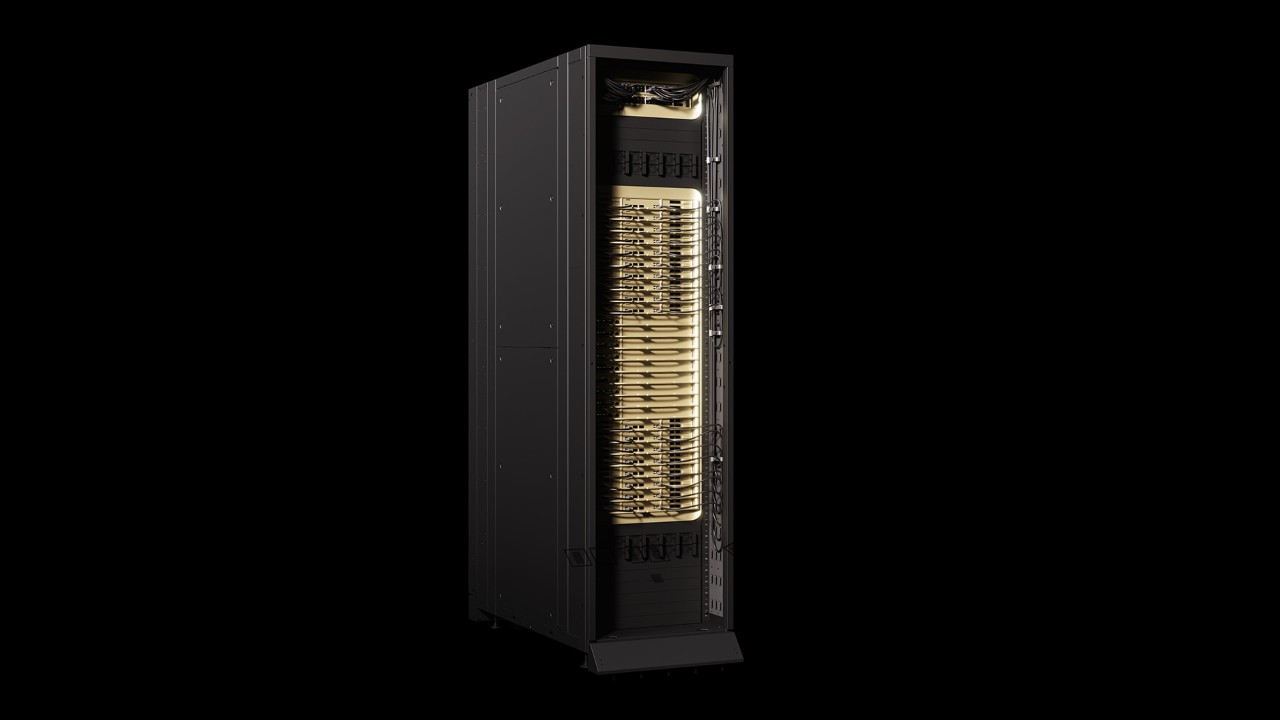
Vera Rubin is designed as a connected system of compute, memory and networking. NVIDIA's NVL72 specification combines 72 Rubin GPUs with 36 Vera CPUs and high-speed interconnects. The company positions this architecture around reasoning, inference and workloads with substantial context. These are vendor descriptions of the platform; the benefit for an individual application still depends on how that application uses it.
The system-level approach matters because useful performance can be limited by moving data as well as processing it. An application may spend time loading model weights, exchanging intermediate results or waiting for an external tool. Increasing arithmetic capacity addresses only some of those delays. The relevant benchmark needs to preserve the workload's actual context lengths, concurrency and response requirements.
Shipment is also the start of another engineering process. The receiving site needs compatible power and cooling, network integration, a working software environment and acceptance checks. Until those pieces are in place, delivered equipment and available compute remain different quantities.
Strategic impact
- Impact
- High
- Horizon
- Deployment and ramp through 2026–2027
- Regions
- Global
- Affected sectors
- Cloud infrastructure · AI
- Key players
- NVIDIA · Cloud operators · System manufacturers
For cloud providers, the opportunity is to turn a new system generation into a service customers can use at an attractive cost. That requires both high utilisation and an offer matched to demand. A system that performs well on a large benchmark run may have different economics when traffic fluctuates or customers require reserved capacity and predictable latency.
For teams purchasing inference, the practical comparison should hold model quality and service conditions constant. Price per token becomes misleading when one offer uses a different precision, accepts longer queues or depends on much larger batches. Time to the first response, completion speed and performance under concurrent load all affect the value of the service.
The release could also affect decisions about existing infrastructure. Waiting for a newer platform carries an opportunity cost, while replacing useful equipment early can sacrifice remaining value. Our view is that migration should follow a demonstrated workload advantage and a credible availability date. A product announcement alone provides neither the full cost comparison nor the delivery assurance.
What to watch next
Watch for customer commissioning announcements, general cloud availability and independently reproducible workload measurements. These establish progressively stronger evidence than a shipment statement: equipment received, a service available, then a result that another team can validate.
The most useful disclosures would pair performance with the conditions that produced it, including model version, precision, batch size, context length, latency and power. Regional availability and lead times matter too. They determine whether a claimed improvement is an option a customer can actually procure within the period relevant to its business.